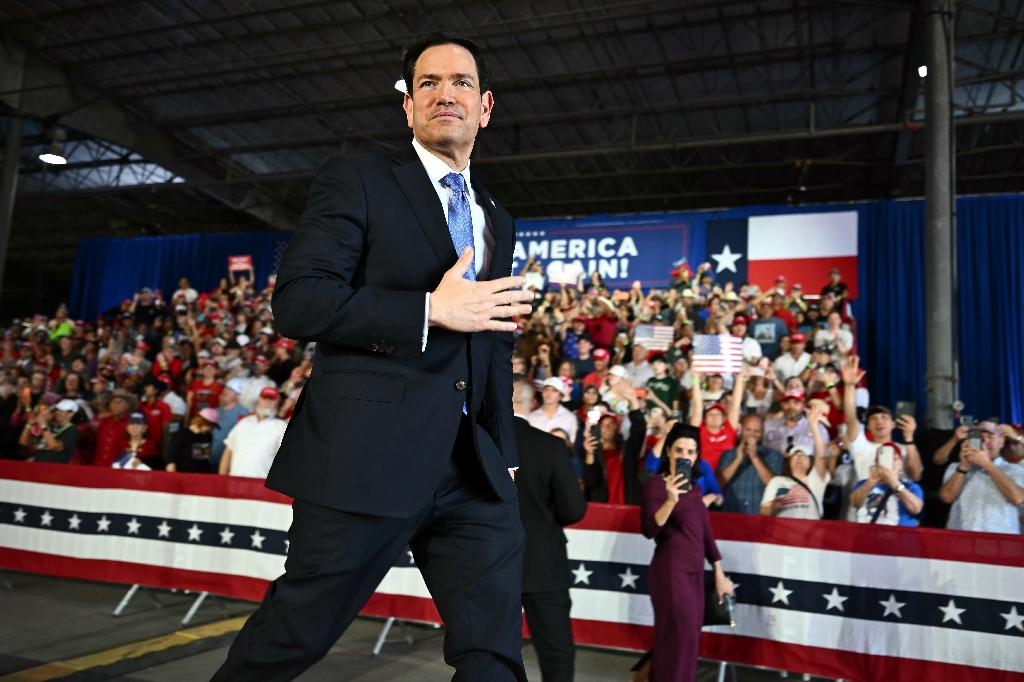
(AFP) – American conservatives converge on Texas this week for what organizers bill as their largest and most influential gathering, with the Iran war and fears of a punishing midterm election cycle heightening the stakes. The four-day Conservative Political Action Conference (CPAC), opening Wednesday near Dallas, is expected to draw top figures from across the Republican Party and its global allies, even as Washington is consumed by conflict abroad and political uncertainty at home.
President Donald Trump — always the marquee draw — is expected once again to dominate an event where his appearances typically serve as both rallying cry and directional signal for the party. His keynote speech is anticipated on Saturday. But this year’s lineup has an added geopolitical edge, with exiled Iranian crown prince Reza Pahlavi emerging as a figure of intense interest. Pahlavi, who has positioned himself as a potential transitional leader following the killing of Iran’s supreme leader, is expected to use the platform to press his case for regime change — aligning with a broader hawkish mood among many attendees as the war deepens.
CPAC organizers have framed the gathering in expansive terms, calling it “the culmination of a year spent strengthening alliances, elevating new voices and reinforcing the message that freedom begins — and must be protected — here at home.” Yet the event unfolds against a backdrop of mounting political headwinds for Republicans, with strategists increasingly warning of difficult months leading up to November’s midterm elections amid economic pressures and the risks of a prolonged conflict in Iran. The war — now in its fourth week — is likely to dominate conversations both onstage and in the corridors, shaping debates over foreign policy, energy security, and America’s global role.
Republican strategists fear that a drawn-out conflict will inflict further pain on a party already expected to lose the House of Representatives in November to the Democrats, and desperately defending its slim 53-47 advantage in the Senate.
At the same time, CPAC arrives with lingering controversy over the release of files linked to convicted sex offender Jeffrey Epstein, an issue that continues to reverberate in conservative circles. The inclusion of former Trump strategist Steve Bannon as a featured speaker has drawn scrutiny given his documented past association with Epstein, though Bannon has not been accused of any wrongdoing.
Despite the distractions, CPAC remains a central showcase for conservative politics — a stage where established figures and rising voices compete for attention, and where the movement’s priorities are sharpened ahead of November’s elections. Last year’s gathering emphasized ideological purity, fights against “woke indoctrination,” and a hard-edged “Make America Great Again,” or MAGA, identity. The main stage — traditionally featuring right-wing global figures such as Hungary’s Viktor Orban, Argentina’s Javier Milei, Brazil’s Jair Bolsonaro, and Trump himself — has become the central showcase for the movement’s evolving mixture of nationalism, populism, and identity politics.
Beyond Trump and Pahlavi, the speaker roster underscores the breadth — and tensions — within today’s conservative movement. Senator Ted Cruz of Texas is expected to draw a hometown reception as he leans into hardline messaging on Iran and border security, while Deputy Attorney General Todd Blanche offers a direct link to the administration’s legal and national security strategy. North Carolina Senate candidate Michael Whatley, a key Trump ally, is likely to use the stage to sharpen the party’s midterm message, particularly on election integrity and turnout.
As in past years, CPAC’s appeal lies not just in its headliners but in its ecosystem — from policy panels to influencer-driven “media row” — where emerging voices test ideas and audition for a larger role in a movement that has always been defined by loyalty to Trump. Among the more controversial additions is Nick Shirley, a 23-year-old far-right YouTuber who rose to prominence after posting videos alleging fraud within Minnesota’s Somali community — claims later contradicted by state officials.
– Frankie TAGGART
© 2024 AFP