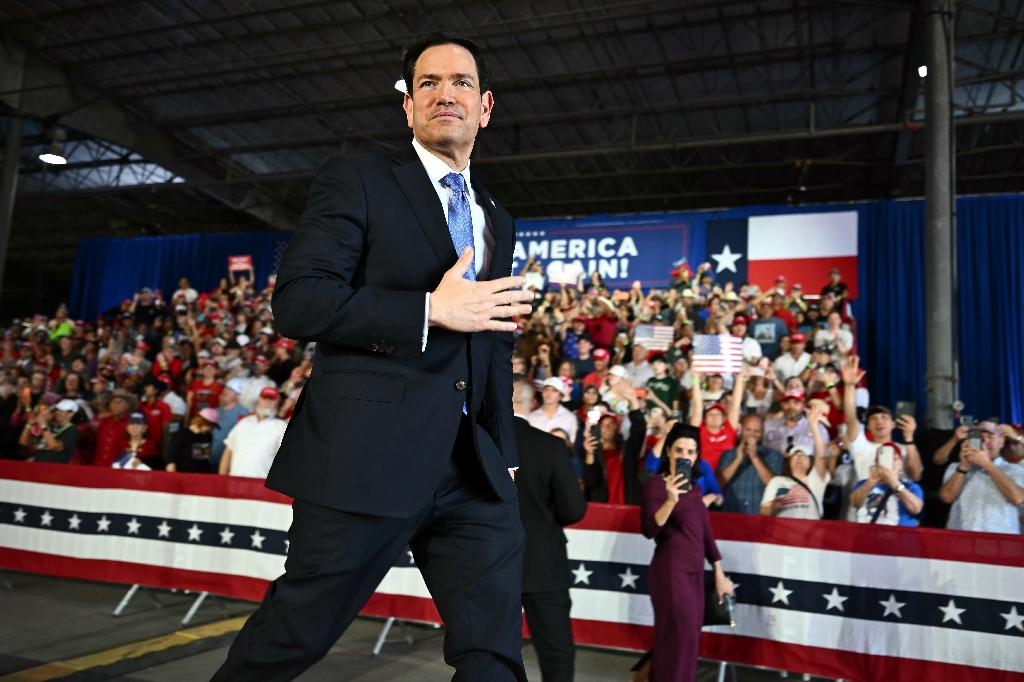
(AFP) – The United States on Wednesday eased its ban on Venezuelan oil exports to Cuba after the communist-run island plunged into an economic crisis, which Caribbean leaders warned could bring instability to the region. US Secretary of State Marco Rubio, a Cuban-American from Florida who has spent his political career hoping to topple Havana’s government, attended a summit of the Caribbean Community where he staunchly defended the January 3 US attack that deposed Venezuela’s leftist leader Nicolas Maduro.
As Rubio held the talks in the tiny island nation of Saint Kitts and Nevis, Cuba’s coastguard shot dead four people on a speedboat registered in the US state of Florida. The Cuban interior ministry said the boat was “illegal” and that shots were fired from it first. The United States did not have immediate comment. Cuba’s economy has been in freefall since the United States snatched Maduro and forced Venezuela to stop oil shipments to the island, which relied on its leftist ally for half its fuel needs.
The Treasury Department said Thursday that the United States would allow “transactions that support the Cuban people” that include Venezuelan oil for “commercial and humanitarian use.” To qualify, the exports would need to go through private businesses and not the vast government or military apparatus in the communist state.
– Warnings on crisis –
Speaking at the opening of the CARICOM summit on Tuesday, Jamaican Prime Minister Andrew Holness warned that a further deterioration in Cuba would impact stability across the Caribbean and trigger migration — Trump’s top political concern. “Humanitarian suffering serves no one,” Holness said. “A prolonged crisis in Cuba will not remain confined to Cuba.” Holness called for “constructive dialogue between Cuba and the United States aimed at de-escalation, reform and stability.”
Canada, which has long broken with its southern neighbor by maintaining warm relations with Havana, announced Can$8 million ($5.8 million) in aid for Cuba, which has experienced rolling blackouts and acute fuel shortages. The Caribbean summit’s host, Saint Kitts and Nevis Prime Minister Terrance Drew, studied in Cuba to be a doctor and said friends have told him of food scarcity and garbage strewn in the streets. “A destabilized Cuba will destabilize all of us,” Drew said.
The United States has maintained an embargo on Cuba almost continuously since Fidel Castro’s 1959 communist revolution. Since becoming the top US diplomat, Rubio has publicly toned down calls for regime change, and Trump has held off on further measures pushed by Cuban-American hardline critics of Havana, such as prohibiting the transfer of remittances.
– ‘Without apology’ on Venezuela –
Addressing the summit, Rubio staunchly defended the deadly operation that seized Maduro, saying that Venezuela has made “substantial” progress since then. “I will tell you this without any apology or without any apprehension: Venezuela is better off today than it was eight weeks ago,” Rubio said. Rubio said he believed Venezuela had moved to a new phase and that there was a need for “fair, democratic elections,” although he did not lay out a timetable.
“Our initial priority in the aftermath of Maduro’s capture was to ensure that there wasn’t instability, that there wasn’t mass migration, that there wasn’t spillover violence, and we believe we have achieved that,” Rubio said. The United States once championed Venezuela’s democratic opposition but since removing Maduro, it has worked with interim president Delcy Rodriguez, who was Maduro’s deputy. Trump has voiced satisfaction with Rodriguez, including her welcome to US oil companies, and has threatened her with violence if she does not do his bidding.
Rubio separately met at the summit with beleaguered Haiti’s prime minister, Alix Didier Fils-Aime. A transitional council set up nearly two years ago handed power to Fils-Aime this month with US support, after it failed to tackle rampant gang violence or hold elections. Rubio is the highest-ranking sitting US official ever to visit Saint Kitts and Nevis, a tiny former British colony reliant on beach tourism that was the birthplace of a US founding father, Alexander Hamilton.
– Shaun TANDON
© 2024 AFP