Washington (AFP) – The US central bank’s favored measure of inflation edged higher last month on the back of rising fuel prices, according to government data published Friday, but another gauge stripping out volatile food and energy prices continued to ease.
US Federal Reserve chair Jerome Powell told a conference in San Francisco that the data had come in “pretty much in line with our expectations,” suggesting the bank is still broadly on the path towards its long-term target of two percent, despite the recent uptick.
But the higher top-line figure will likely still cause concern on President Joe Biden’s reelection campaign team, as the Democratic incumbent seeks to convince still-skeptical consumers that the economy is heading in the right direction ahead of November’s vote.
The personal consumption expenditures (PCE) price index rose at an annual rate of 2.5 percent in February, up 0.1 percentage points from a month earlier, the Commerce Department said in a statement.
The figure was in line with the median forecasts in a survey of economists conducted by Dow Jones Newswires and The Wall Street Journal.
US financial markets were closed for the Good Friday holiday.
Goods prices rose 0.5 percent last month, while the costs of services increased by 0.3 percent.
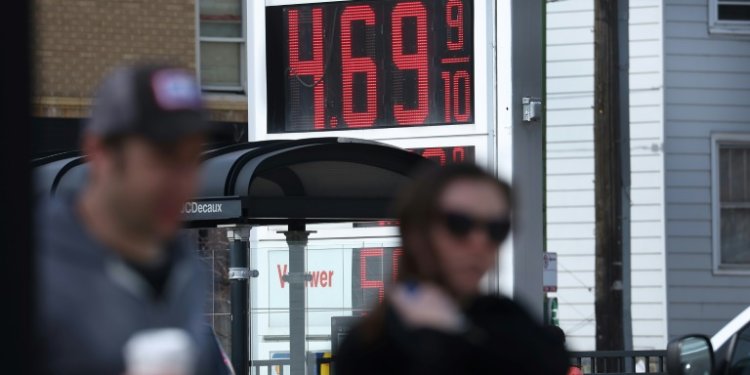
Much of the February increase in the cost of goods came from energy prices, which rose 2.3 percent from January on the back of a range of factors, including a recent decision by the OPEC+ alliance to extend daily supply cutbacks through the end of June.
On a monthly basis, PCE inflation eased slightly from January, rising by 0.3 percent. “The loosening of labor market conditions, stable inflation expectations, and likely disinflation in rents to come all make us confident that inflation will still trend slightly lower over the course of this year,” Michael Pearce from Oxford Economics wrote in a note to clients.
“That should be enough to give the Fed confidence to begin removing some of the policy tightness later this year, though the resilience of the real economy means policymakers are in no rush,” he added. Recent data has led some Fed officials to question policymakers’ recent prediction of three interest rate cuts this year, as the US central bank pivots from tightening to loosening monetary policy.
“In my view, it is appropriate to reduce the overall number of rate cuts or push them further into the future in response to the recent data,” Fed Governor Christopher Waller told a conference in New York on Wednesday.
– Easing ‘core’ prices -While the headline inflation rate rose last month, the closely watched “core inflation” measure, which strips out food and energy costs, eased slightly, rising by 2.8 percent on an annual basis, and by 0.3 percent from January.
“The stickiness in the core and services inflation readings in February and January justifies Fed officials’ less dovish mood as of late,” Nationwide chief economist Kathy Bostjancic wrote in an investor note. “It supports our view that the Fed waits to at least June to start cutting rates, with odds of a July start rising,” she added. Futures traders currently assign a probability of just under 65 percent that the Fed will have started cutting rates by mid-June, according to CME Group data.
After rising by 1.0 percent in January, personal income rose by a more modest 0.3 percent last month, the Commerce Department said. But sharply higher consumer spending figures helped push down personal savings as a percentage of disposable income, from a revised 4.1 percent in January to 3.6 percent in February.
“Real consumer spending surprised on the upside in February, rebounding sharply driven by stronger services spending,” said Pearce from Oxford Economics. “That strength came even as the rebound in inflationary pressures took a bite out of real disposable incomes,” he added.
© 2024 AFP