(AFP) – At the heavy equipment repair business Corey Coffey runs in Canada’s oil hub, the future felt precarious when President Donald Trump returned to office last year. But standing near a busted truck engine he was fixing in Fort McMurray, Alberta, Coffey sounded optimistic, convinced the energy price shocks triggered by the Iran war showed how much the United States needs Canadian oil.
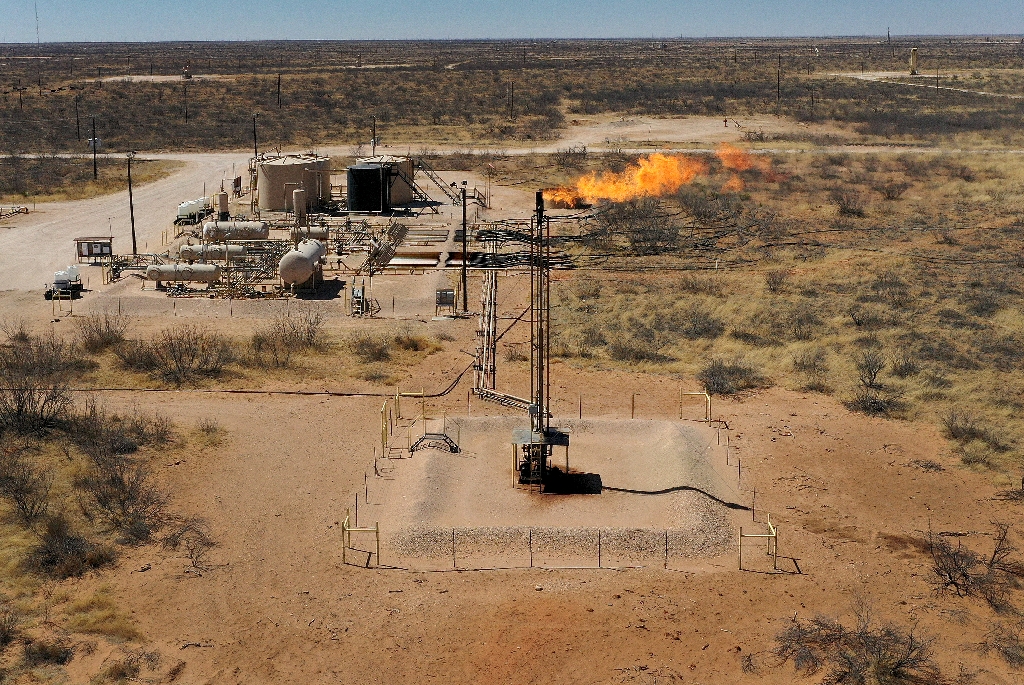
“If you look at it globally right now, in terms of Iran and Venezuela, Fort McMurray has been more of a strong, stable point for the US,” the cheerful 45-year-old told AFP. “I cannot see (Trump) shutting down the oil sands when he absolutely needs us,” he said. Coffey’s business, which adjoins a kennel packed with barking dogs, is entirely reliant on Alberta’s oil sands — vast deposits of a heavy crude called bitumen that make up one of the world’s largest oil fields.
Last year, Trump vowed to put tariffs on all Canadian imports. The levies could have been disastrous for Alberta, which sold $111 billion in oil to the United States in 2024. But Trump has not tariffed Canadian oil and few believe he will. The more pressing question, experts say, is whether the US need for Canadian oil has given Ottawa leverage in upcoming trade negotiations.
Coffey is a proud advocate for Alberta’s oil sands. Like many in the province, he downplays the environmental costs of oil production and does not support Prime Minister Mark Carney’s Liberal government. But he said he backed Carney using oil to get a better deal from Trump. “If you go into negotiations without anything on your side of the table, you’re going to get rolled,” he said.
– ‘Cards to play’ –
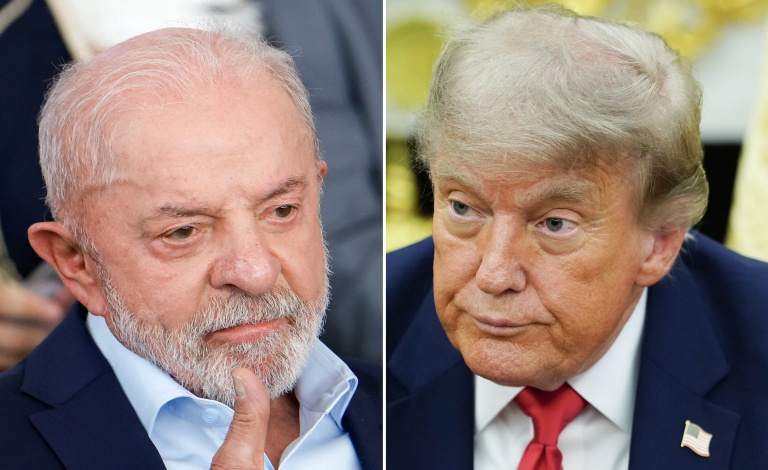
Ottawa and Washington are expected to discuss revising the United States-Canada-Mexico Agreement (USMCA) over the coming weeks. Trump signed and praised the deal in his first term but now calls it “irrelevant” and says the United States does not need anything Canada produces. Trump’s trade team has derided Canada and personally insulted Carney, while the Canadian premier has said the president’s leadership triggered “a rupture” in the world order. No substantial progress has been reported in preliminary discussions.
For Canada, preserving broad tariff-free access to the US economy is crucial. Ottawa also wants to eliminate, or reduce, the US sectoral tariffs punishing Canada’s auto, steel, aluminum and lumber sectors. Trump’s team has sought to portray Canada as an economic minnow that can’t make demands — but oil may be marginally tipping the balance.
Canada-US oil sector relations are “huge and well-integrated,” said Matthew Holmes, executive vice president at the Canadian Chamber of Commerce. Last year, more than 60 percent of all crude imports to the United States came from Canada. There are US facilities that have been specifically modified to refine Alberta’s heavy crude. In an already close relationship, “the Iran conflict is changing the dynamic quite radically,” Holmes said. United States has again become a net oil exporter and Canada provides some of the crude the US refines and ships abroad. It could feasibly supply more.
Holmes cautioned it would be tactically unwise for Canada to use heavy-handed threats to extract concessions from Trump. “We’re not going to bend the US to our will, energy integration notwithstanding,” he said. But, he added, by injecting Canada’s status as a reliable crude supplier into the discussions, “we’re giving ourselves more cards to play.”
– ‘Industry threatened’ –
For Carney, this is a tricky time to use Alberta oil as a bargaining chip. Separatists in the province have built record high support of roughly 30 percent, according to polls, by railing against Ottawa Liberals, who they accuse of stifling oil investment because of excessive environmental concern. Carney has taken steps rejected by his climate-focused predecessor Justin Trudeau, including advancing talks on a new pipeline.
Former Alberta premier Thomas Lukaszuk, who has emerged as a federalist leader resisting separatism, warned of broad unease among Alberta’s oil workers as the sector evolves. “They are phenomenal at what they do, but unfortunately, many of them don’t have transferable skills and when they see their industry threatened, they worry about their livelihood,” he told AFP.
– Ben Simon
© 2024 AFP