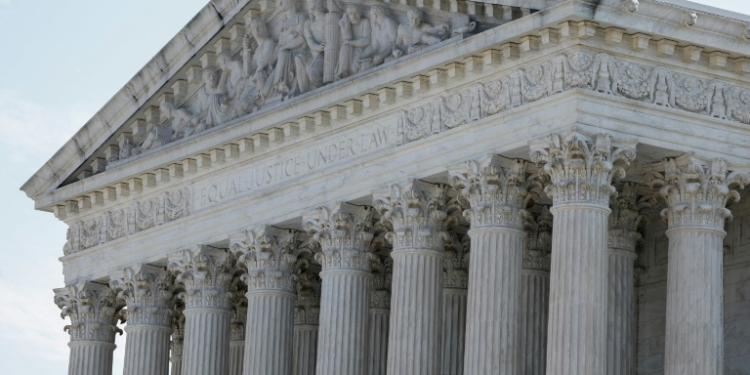
Washington (United States) (AFP) – The US Supreme Court on Thursday ruled in favor of a US docks company whose property in Havana was confiscated under former Cuban leader Fidel Castro. The 8-1 ruling by the court could pave the way for other American firms to make claims for assets seized after the island’s 1959 Communist revolution. The decision by the conservative-dominated court comes at a time of soaring tensions between Washington and Havana, with President Donald Trump threatening to take over the country.
The United States indicted Cuba’s former president Raul Castro, Fidel Castro’s younger brother, on murder charges on Wednesday in connection with the deadly 1996 downing of two civilian planes manned by anti-Castro pilots. The Supreme Court reversed a federal appeals court decision in a case filed by the American ports company Havana Docks Corp. The appeals court had overturned a lower court ruling that four cruise lines had to pay millions of dollars in compensation for using the confiscated docks in Cuba.
Carnival, Royal Caribbean, Norwegian and MSC Cruises had been ordered to pay $109 million each to Havana Docks, which held the concession at what is now the Havana Cruise Port Terminal before it was nationalized by the Cuban government in 1960. The fines were levied under a 1996 law, the Helms-Burton Act, which allowed any American whose assets had been expropriated by the Castro government to sue those who profited from their use. The 11th Circuit Court of Appeals found that Havana Docks did not own the property, but rather held a 99-year concession that expired in 2004 and was therefore not eligible to receive damages.
“We disagree,” Supreme Court Justice Clarence Thomas said. “Havana Docks has shown that the cruise lines used confiscated property in which Havana Docks had a property interest and to which it owns a claim.” “Those who use property tainted by a past confiscation,” Thomas said, are “liable to any United States national who owns a claim to that property.”
Justice Elena Kagan dissented. “What Havana Docks owned was only a property interest allowing it to use those docks for a specified time,” Kagan said. “And that time-limited interest expired in 2004 — more than a decade before the cruise lines ever used the docks.”
The use of the docks took place between 2016 and 2019 after President Barack Obama eased the US embargo on Cuba to allow cruise ships to make stopovers there. Obama’s successor, Republican Donald Trump, reversed that decision. The United States has imposed an economic embargo on Cuba since 1962.
© 2024 AFP